Garage Door Balance Testing: How Professionals Diagnose Spring and Opener Strain
A garage door is one of the largest moving systems in your home, and when it is working properly, it should feel almost effortless. That smooth movement is not just because of the garage door opener. In fact, the springs do most of the heavy lifting. When the door becomes unbalanced, the opener, tracks, rollers, cables, and springs can all experience extra strain.
That is why garage door balance testing is an important part of professional garage door maintenance and repair. It helps technicians determine whether the door is moving safely, whether the springs are carrying the right amount of weight, and whether the opener is being forced to work harder than it should.
For homeowners in Dayton, OH and surrounding areas, understanding how balance testing works can help you catch problems early before they turn into costly repairs or safety hazards.

What Is Garage Door Balance Testing?
Garage door balance testing is a professional inspection process used to determine whether a garage door can hold its position and move smoothly without excessive force. A properly balanced garage door should not slam shut, shoot upward, or feel unusually heavy when disconnected from the opener.
The test helps identify whether the spring system is properly supporting the door’s weight. If the springs are worn, stretched, broken, or incorrectly adjusted, the door may become difficult to lift or may place too much stress on the opener.
In simple terms, balance testing answers one major question: is the garage door’s weight being properly supported by the spring system? If the answer is no, the door may still open and close temporarily, but the system is likely under stress.
Why Garage Door Balance Matters
A garage door opener is designed to guide and control the door’s movement, not carry the full weight of the door. When a garage door is balanced correctly, the opener only needs to provide a controlled push or pull.
When the door is out of balance, the opener may be forced to lift more weight than intended. Over time, this can lead to motor strain, worn gears, damaged drive belts or chains, and premature opener failure.
Poor garage door balance can also affect other parts of the system, including:
- Torsion or extension springs
- Lift cables
- Rollers
- Hinges
- Tracks
- Bearings
- Opener rail and trolley components
An unbalanced garage door can also become a safety concern. If the door is too heavy or drops too quickly, it may close unexpectedly or put people, pets, vehicles, and stored items at risk.
Common Signs Your Garage Door May Be Out of Balance
You may not always notice balance issues right away, especially if the opener is still managing to move the door. However, there are several warning signs homeowners should pay attention to.
Your garage door may need professional balance testing if:
- The door feels unusually heavy when lifted manually
- The opener sounds strained or louder than normal
- The door closes too quickly
- The door opens a few inches and stops
- The door looks crooked while moving
- The door shakes, jerks, or binds
- The opener motor runs but struggles to lift the door
- Springs look stretched, rusted, or separated
- Cables appear loose or uneven
- The door does not stay halfway open when tested
If you notice any of these issues, avoid repeatedly forcing the opener to operate. Continuing to use the system can make the damage worse.
How Professionals Perform Garage Door Balance Testing
A professional technician follows a careful process when testing garage door balance. While the basic concept may seem simple, garage doors involve high-tension spring systems that can be dangerous if handled incorrectly.
Here is what a typical professional garage door balance inspection includes.
1. Visual Inspection of the Door System
Before disconnecting anything, the technician inspects the full garage door system. This includes checking the springs, cables, drums, rollers, hinges, tracks, brackets, and opener connection.
They look for visible signs of damage such as frayed cables, bent tracks, worn rollers, cracked hinges, rusted springs, or uneven cable tension. If a major safety issue is present, the technician may not perform a manual balance test until the damaged part is addressed.
2. Disconnecting the Garage Door Opener
To properly test balance, the garage door must be separated from the opener. This is usually done by pulling the emergency release cord while the door is in the closed position.
This step allows the technician to move the door by hand and determine whether the spring system is doing its job. If the opener remains connected, it can hide balance problems because the motor may compensate for the extra weight.
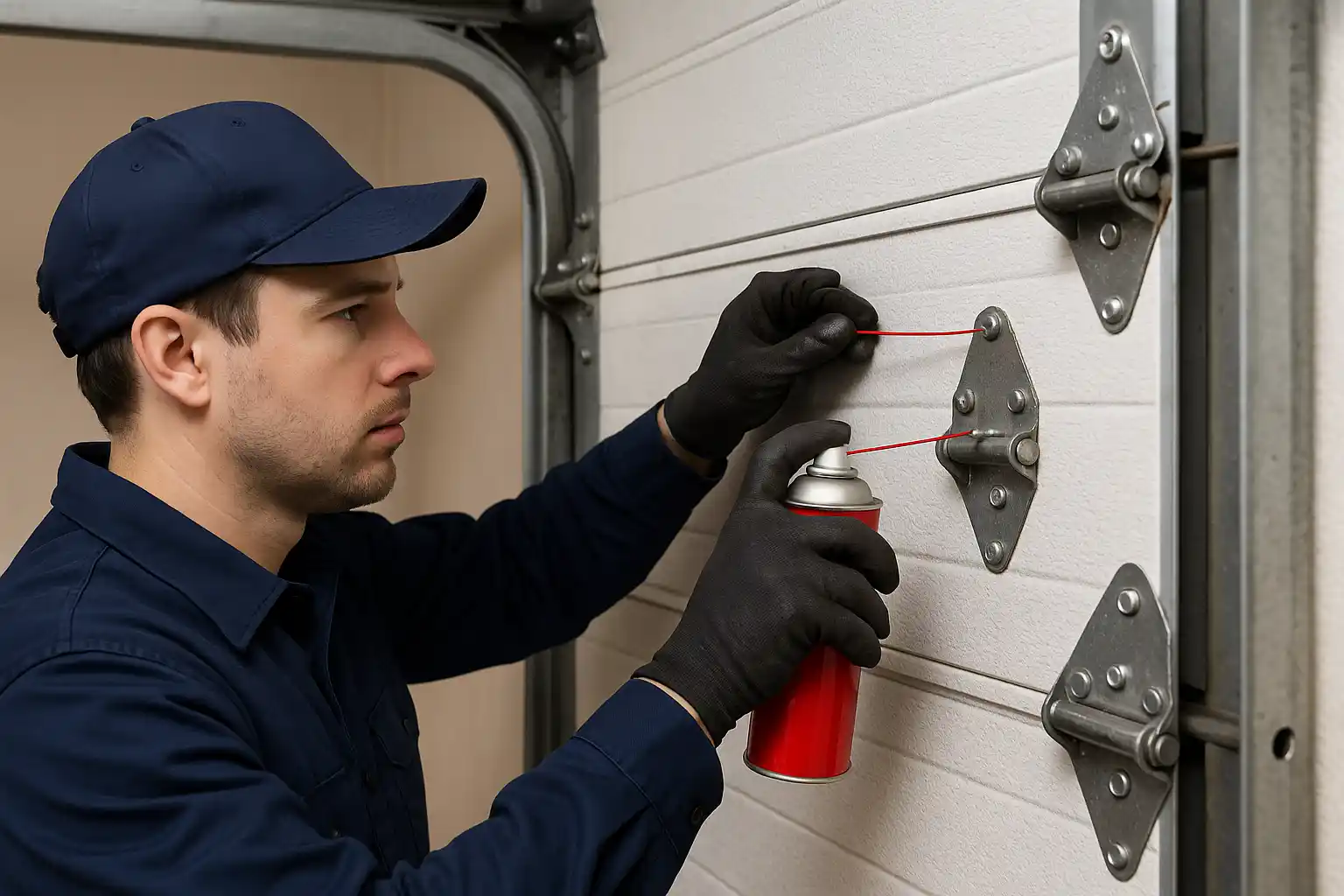
Manual Lift and Halfway Position Testing
3. Manual Lift Test
Next, the technician carefully lifts the garage door by hand. A properly balanced door should move smoothly without requiring excessive force.
The technician pays attention to how heavy the door feels, whether it binds at certain points, and whether both sides move evenly. If the door feels unusually heavy, the springs may be weak, damaged, or improperly adjusted.
4. Halfway Position Test
One of the most common parts of garage door balance testing is the halfway position test. The technician raises the door about halfway and then carefully lets go.
A balanced garage door should stay in place or move only slightly. If the door drops quickly, the springs may not be providing enough lift. If the door rises on its own, the springs may be over-tensioned.
Both conditions are problems. A door that drops can be dangerous, while a door that rises may place stress on other components and affect opener performance.
Schedule Garage Door Balance Testing in Dayton, OH
5. Full Travel Check
The technician may also move the door through its full range of motion. This helps identify points where the door sticks, drags, or becomes uneven.
Sometimes a balance problem is related to spring tension. Other times, the issue may involve track alignment, damaged rollers, worn hinges, or cable problems. A full travel check helps separate spring-related problems from other mechanical issues.
How Spring Strain Affects Garage Door Performance
Garage door springs are under constant tension. Their job is to counterbalance the weight of the door so it can open and close safely.
Over time, springs weaken from repeated use. Most springs are rated for a certain number of cycles, with one cycle being one full opening and closing of the door. As springs wear down, they may lose tension and become less effective.
When springs are strained, you may notice the door getting heavier, moving unevenly, or failing to stay open. In some cases, a spring may eventually snap. A broken spring can make the door extremely heavy and unsafe to operate.
Professional garage door balance testing helps catch spring problems before complete failure occurs.
How an Unbalanced Door Strains the Opener
Many homeowners assume the opener is responsible for lifting the garage door. In reality, the opener should not be doing the work of the springs.
When a door is out of balance, the opener motor may work harder every time the door opens. This can cause:
- Motor overheating
- Worn internal gears
- Chain or belt stress
- Trolley damage
- Jerky operation
- Shortened opener lifespan
If your opener is noisy, slow, or frequently reversing, the issue may not be the opener itself. The real problem could be an unbalanced garage door.
Should Homeowners Test Garage Door Balance Themselves?
Homeowners can observe warning signs, but they should be cautious with manual testing. Garage doors are heavy, and spring systems are under high tension. If a door is severely out of balance, disconnecting the opener or lifting the door manually can be dangerous.
You should never attempt to adjust torsion springs, extension springs, cables, drums, or bottom brackets yourself. These parts can cause serious injury if handled incorrectly.
The safest option is to contact a garage door professional, especially if the door feels heavy, slams shut, hangs crooked, or has visible spring or cable damage.
When to Schedule Professional Garage Door Service
Garage door balance should be checked during routine maintenance, after spring replacement, after opener installation, or whenever the door begins acting differently.
You should schedule service if your garage door:
- Struggles to open
- Reverses unexpectedly
- Makes loud grinding or popping noises
- Will not stay open manually
- Has a broken or stretched spring
- Looks uneven in the tracks
- Puts visible strain on the opener
Catching balance issues early can prevent larger repairs and help extend the life of your garage door system.
Professional Garage Door Balance Testing in Dayton, OH
If your garage door feels heavy, sounds strained, or does not move smoothly, it may be time for a professional inspection. Door Service Solutions provides garage door repair, maintenance, spring replacement, opener repair, and troubleshooting throughout Dayton, OH and surrounding communities.
Our technicians can inspect your door, test the balance, diagnose spring or opener strain, and recommend the right repair before the issue becomes more serious.
Final Thoughts
Garage door balance testing is one of the most important ways to identify spring strain, opener stress, cable problems, track issues, and unsafe door movement before they become larger repair needs.
If your garage door is heavy, noisy, uneven, or difficult to operate, the problem may not be the opener alone. The door may be out of balance, forcing the entire system to work harder than it should.
For reliable garage door balance testing and repair in Dayton, contact Door Service Solutions today to schedule service.
Need Garage Door Balance Testing in the Dayton Area?
If your garage door feels heavy, drops too fast, strains the opener, or does not stay open manually, Door Service Solutions is here to help. Contact us today to schedule a professional inspection and get your garage door moving safely again.
Frequently Asked Questions About Garage Door Balance Testing
What is garage door balance testing?
Garage door balance testing is a professional inspection process used to determine whether the door’s spring system is properly supporting the weight of the door. A balanced garage door should move smoothly and stay in place when tested manually.
How do I know if my garage door is out of balance?
Common signs include a heavy door, a door that drops quickly, uneven movement, opener strain, loud operation, loose cables, stretched springs, or a garage door that does not stay halfway open.
Can an unbalanced garage door damage the opener?
Yes. When the door is out of balance, the opener may be forced to lift more weight than it was designed to handle. This can lead to motor strain, worn gears, chain or belt stress, trolley damage, and premature opener failure.
Is it safe to test garage door balance myself?
Homeowners can watch for warning signs, but manual testing can be dangerous if the door is severely out of balance or if springs and cables are damaged. Spring systems are under high tension and should be inspected or adjusted by a professional.
When should I schedule garage door balance testing?
You should schedule professional balance testing during routine maintenance, after spring replacement, after opener installation, or anytime the door feels heavy, moves unevenly, strains the opener, or will not stay open manually.
Schedule Garage Door Balance Testing in Dayton, OH Today
Serving Dayton, Ohio with professional garage door balance testing, spring inspection, opener strain diagnosis, cable checks, track troubleshooting, garage door repair, and routine maintenance.
Request Service



 Trustindex verifies that the original source of the review is Google.
  Trustindex verifies that the original source of the review is Google.
  Trustindex verifies that the original source of the review is Google.
  Trustindex verifies that the original source of the review is Google.
  Trustindex verifies that the original source of the review is Google.
  Trustindex verifies that the original source of the review is Google.
  Trustindex verifies that the original source of the review is Google.
  Trustindex verifies that the original source of the review is Google.