

Broken Garage Door Spring in Dayton: What to Watch For
A visible break in the spring, a loud bang followed by a door that will not lift, or a door that suddenly feels unusually heavy may indicate a broken garage door spring. Because opener, cable, track, and roller problems can cause some of the same symptoms, garage door spring repair in Dayton should begin with a professional inspection rather than repeated attempts to operate the door.
This guide explains which signs point more directly to a failed spring, which symptoms need broader diagnosis, what a technician may inspect, and what homeowners can safely observe without touching tension-loaded hardware.
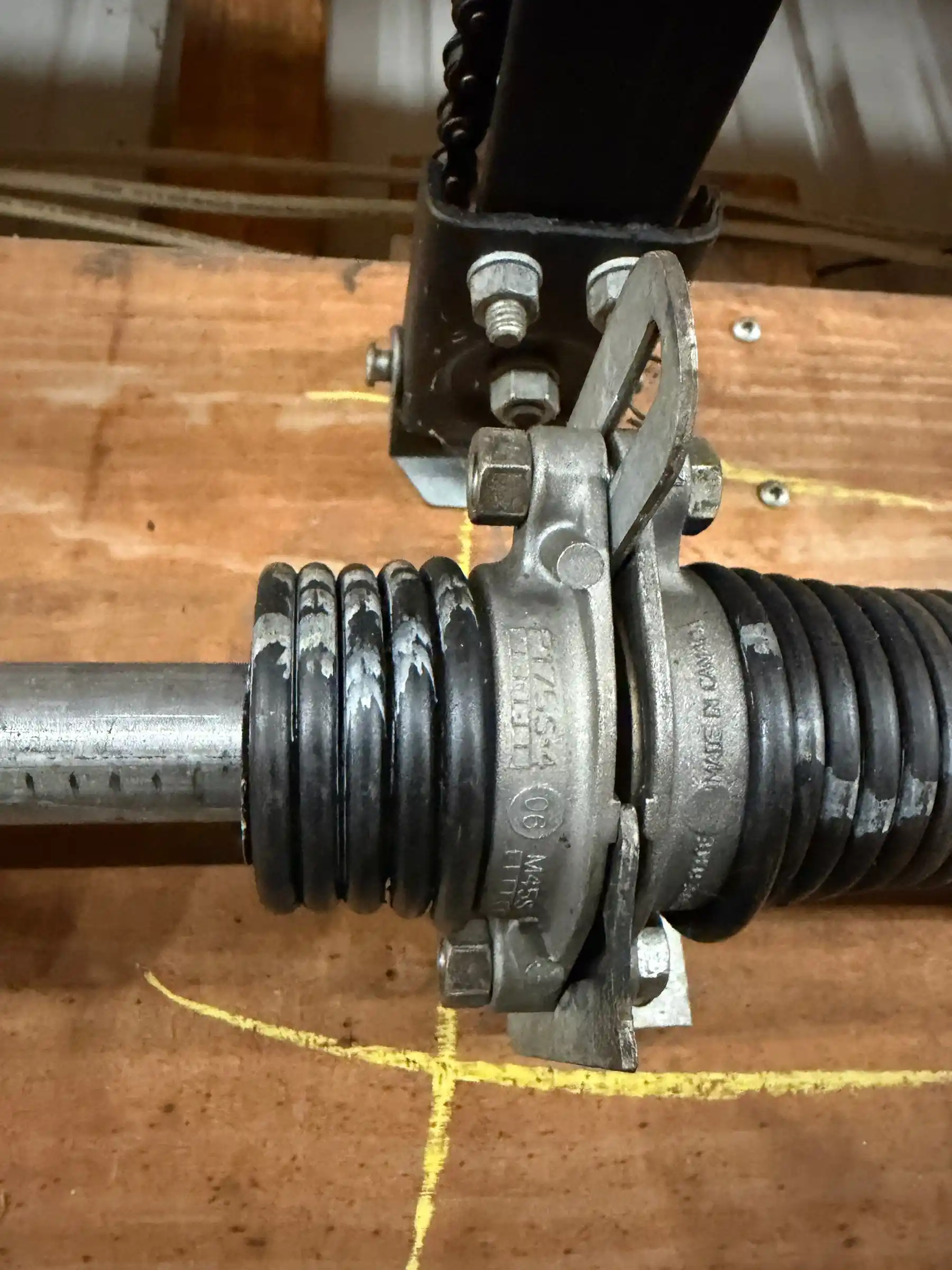
What Does a Garage Door Spring Do?
The spring system counterbalances much of the door's weight so the door can travel in a controlled way. The opener guides a properly balanced door through its cycle; it is not intended to compensate for a failed counterbalance system.
When a spring breaks or no longer provides the required support, the door may become too heavy for the opener to move. Repeated opener use can add strain without identifying the cause.
Which Signs Point More Directly to a Broken Spring?
A visible separation in a torsion spring above the door is a stronger spring-specific sign. A loud bang followed by a door that becomes unusually heavy or opens only a short distance may also indicate that the counterbalance system has failed.
- A visible gap in a torsion spring
- A spring that appears separated or visibly damaged
- A loud pop or bang followed by a sudden change in door movement
- A door that becomes unusually heavy or will not lift after that sound
Observe only from a safe distance. Do not touch the spring, cables, drums, brackets, or other tension-loaded parts to confirm the diagnosis.
Which Symptoms Need a Broader Diagnosis?
A door that stops partway, moves unevenly, sits crooked, or fails to respond does not prove that a spring is broken. Those symptoms can also be associated with cable damage, track or roller problems, opener faults, obstructions, sensor issues, or more than one condition at the same time.
A loose or hanging cable is a stop-use condition, but it does not identify the root cause by itself. Cable position can change after spring failure, a door becomes uneven, or another part of the counterbalance system is damaged. A technician may need to inspect how the connected parts are supporting and guiding the door.
Torsion Springs and Extension Springs
Many residential doors use either torsion springs or extension springs. Torsion springs are generally mounted on a shaft above the door opening. Extension springs are generally positioned along the horizontal track area on both sides of the door.
The correct replacement cannot be chosen by appearance alone. Spring type and specifications must match the door's weight, size, hardware, track configuration, number of springs, and manufacturer requirements. A mismatched spring can leave the door improperly balanced even if the door moves.
Why Spring Repair Is Not a Safe DIY Job
Garage door springs store substantial mechanical energy. Spring winding, cable routing, drums, bottom brackets, and related hardware can move suddenly when tension or door weight is released.
Do not adjust or replace springs, loosen bottom brackets, pull or reconnect cables, remove loaded hinges, or try to lift an unstable or unusually heavy door alone. Do not straighten a loaded track or push an off-track roller back into place. If a vehicle is trapped, tell the service provider when requesting help rather than forcing the door.
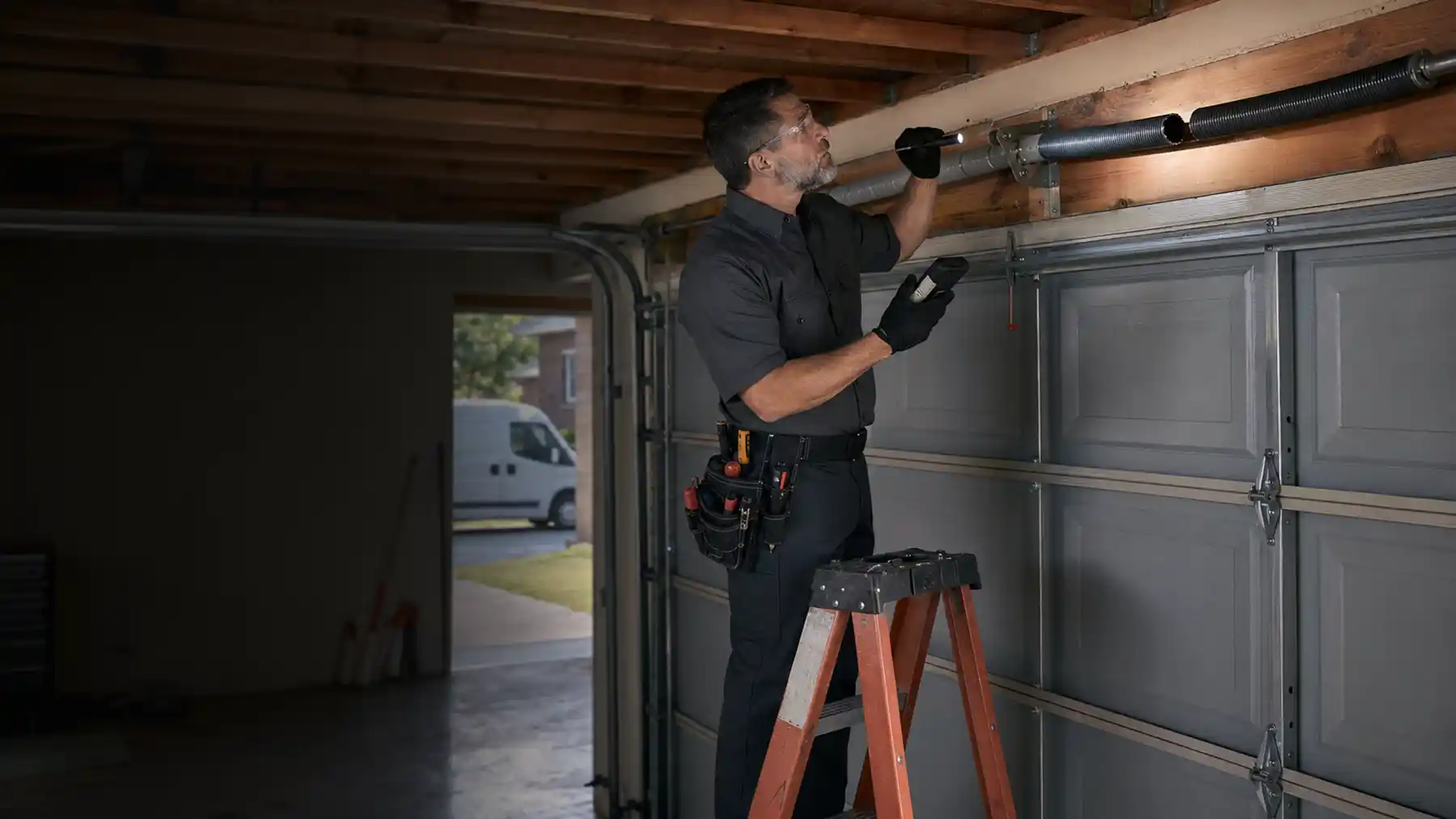
A Spring Problem Can Resemble an Opener Problem
If the opener hums, clicks, or begins to move the door before stopping, a failed spring is one possible cause. An opener fault, door obstruction, damaged hardware, or another source of resistance may produce a similar result.
Diagnosis may include the spring system, cables, drums, rollers, tracks, hinges, door position, balance, and opener response. Looking at the connected system helps separate the failed part from damage or wear that may have contributed to the symptom.
Avoid repeated opener cycles after a loud bang, visible damage, or a sudden change in door weight or movement.
Request a spring-system inspection before operating it again.
What Can Dayton Homeowners Safely Check?
Homeowners can report visible and audible symptoms without manipulating the door. From a safe location, note the following:
- Whether the opener has power and the wall control or remote responds
- Whether the door is open, closed, or stopped partway
- Whether the bottom of the door appears level with the floor
- Whether a spring has a visible gap or a cable appears loose, without touching either
- Where a bang, scraping sound, click, or hum seems to come from
- Whether there is a visible obstruction or damaged part near the door's path
Do not stand or walk beneath an open or unevenly supported door. If the door is crooked, off track, unstable, unusually heavy, or visibly damaged, stop the check and keep the area clear.
Repair Scope: One Spring, Both Springs, or Other Parts?
The appropriate repair scope depends on the door's configuration and the condition and compatibility of the existing parts. On a multi-spring system, a technician may compare the springs' specifications, condition, and shared wear before recommending whether one spring or more than one should be replaced.
The inspection may also identify a cable, drum, bearing, roller, hinge, track, bracket, or opener issue that requires attention. Related parts should not be replaced automatically; the recommendation should be based on observed condition, door performance, compatibility, and manufacturer requirements.
What Happens During a Spring Repair Visit?
A technician may first review the door's position, visible damage, spring arrangement, cable routing, track condition, and opener response. After the door is in a safe state, the technician can confirm the failure, identify compatible replacement parts, complete the required repair, and check how the door moves with the connected system.
Repair scope can vary with door weight and size, spring type and configuration, access to the system, damage to connected hardware, and the availability of compatible parts. Door Service Solutions provides broken spring replacement through its garage door repair service for Dayton-area homeowners.
Can Maintenance Prevent Every Broken Spring?
No maintenance visit can prevent every spring failure. Springs and other moving parts experience wear through normal operation, and a component can still fail between inspections.
Maintenance may help identify changes in balance, visible wear, loose hardware, roller condition, or opener strain before the system becomes unreliable. Lubrication cannot repair a damaged spring or correct an incompatible part. Maintenance products and procedures vary by design, so follow the door and hardware manufacturer's guidance rather than applying lubricant to the tracks or directly to nylon roller wheels.
Garage Door Spring Repair FAQs
How can I tell whether the spring or the opener is the problem?
A visible break in the spring or a loud bang followed by a suddenly heavy door more directly suggests spring failure. Humming, clicking, stopping, or failure to lift can also come from opener or door-system problems, so those symptoms require inspection rather than a definite diagnosis.
Should both garage door springs be replaced if one breaks?
Not in every situation. The recommendation depends on the system's configuration, the condition and compatibility of the remaining spring, shared wear, door performance, and manufacturer requirements. A technician should evaluate the full spring arrangement before determining the replacement scope.
Can I open a garage door with a broken spring?
Do not force or lift a door with a suspected broken spring, loose cable, crooked position, or unstable movement. The door may be unexpectedly heavy or unevenly supported. Keep the area clear and tell the service provider whether the door is open, closed, or blocking a vehicle.
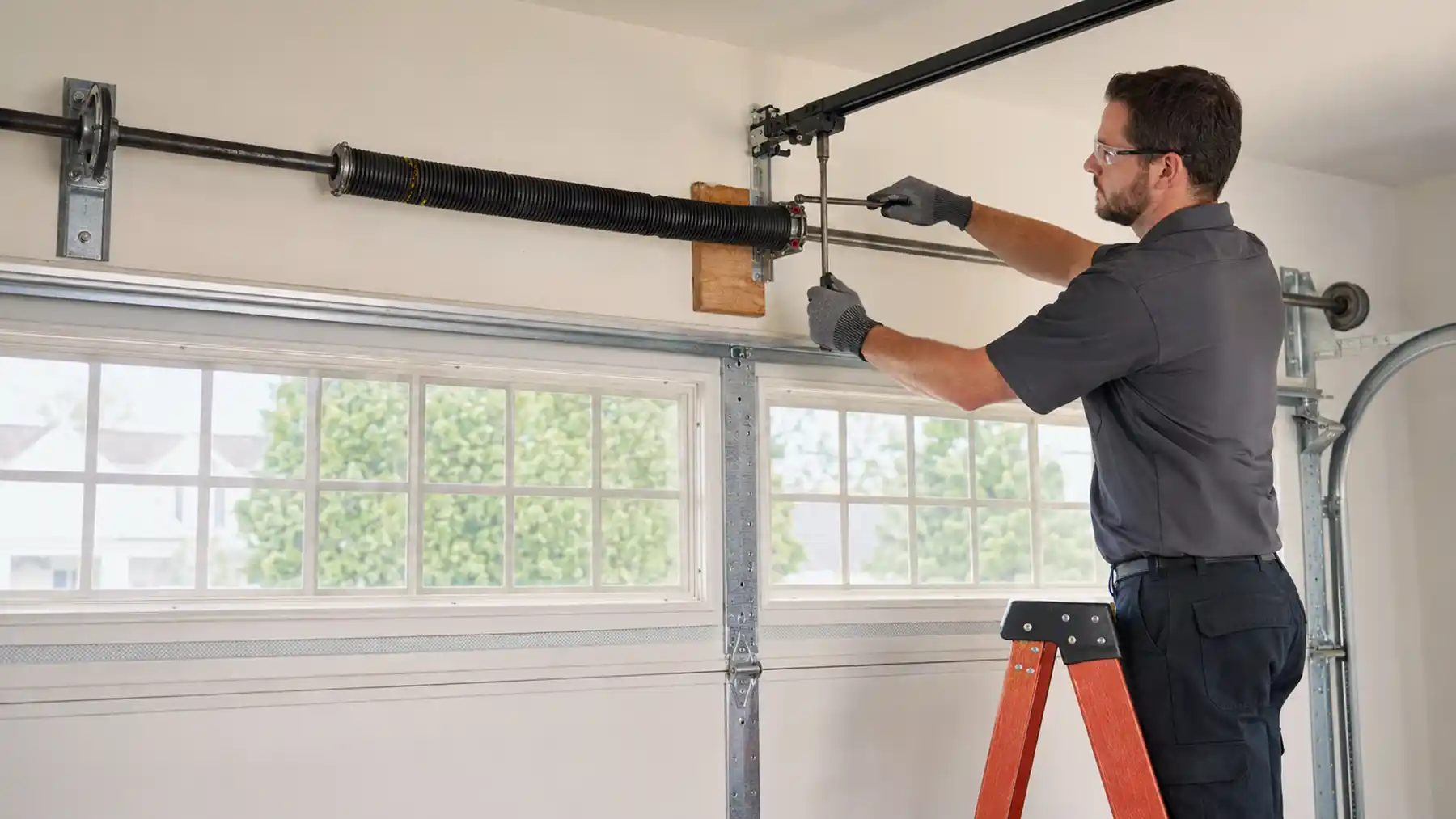
Prepare the Area Without Moving the Door
Keep children and pets away from the garage, and do not park or store items in the door's travel path. If it is safe to do so without walking under the door or approaching damaged hardware, clear a normal walking path for the technician.
Leave the door in its current position. Do not attempt to secure, lift, lower, or reconnect it yourself. The symptom details you provide can help Door Service Solutions prepare for the inspection.
Request Garage Door Spring Repair in Dayton
If your door is unusually heavy, crooked, stuck, or showing visible spring or cable damage, stop operating it and keep the area clear. Contact Door Service Solutions and describe the door's position, opener response, and visible symptoms.
Request ServiceWhy Choose Us?
Expertise You Can Trust
Local Expertise
Based in Dayton, Ohio, we’re familiar with the needs of local businesses and committed to supporting our community.
Fast Response Times
We pride ourselves on quick turnarounds for service calls, repairs, and installations—because we know downtime costs you money.
Certified Technicians
Our technicians are trained, certified, and experienced in handling complex door systems, ensuring every project meets code and exceeds expectations.
Turnkey Solutions
Initial consultation to final installation and ongoing support, we handle every phase of your roll-up door needs.